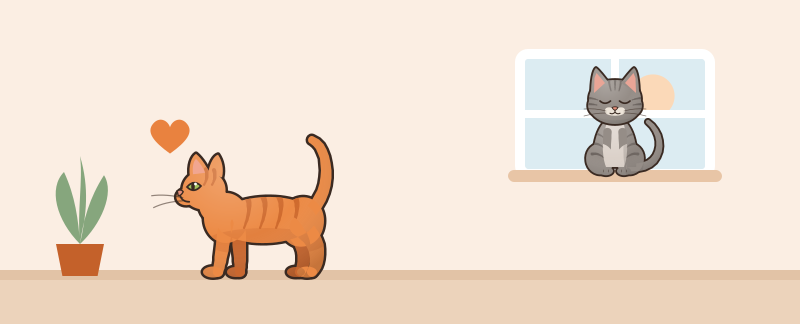
Cats talk all the time. They just don’t use many words. Most of what your cat says comes through its tail, ears, eyes, whiskers and the way it holds its body. Smell and touch carry messages too.
Cat body language can look subtle at first, especially if you grew up with dogs. But once you know what to look for, you start to see a running commentary: “hello”, “I’m comfortable”, “not now”, “please back off”. This guide shows you how to read it, and how to answer.
Cat body language: read the whole cat
A swishing tail on its own doesn’t tell you much. A swishing tail with flattened ears, wide pupils and a crouched body tells you a lot. Always look at several signals together, and at the situation. Wide pupils in a dark room are normal. Wide pupils in a bright room, next to a strange dog, are a warning.
It also helps to know your own cat on an ordinary day. Some cats are naturally vocal or restless. What matters most is change.
The tail
- Held up, tip relaxed or slightly curled. A friendly greeting. Cats raise their tails when they approach someone they like.
- Puffed up, with an arched back and sideways stance. “Stay away.” The cat is making itself look bigger because it feels threatened.
- Tucked between the back legs. Anxiety or fear.
- Held out and moving slowly from side to side. Often frustration. Give the cat some space.
- Thumping on the floor while the cat crouches. A defensive cat that is close to its limit.
- A gently twitching tip. Interest or mild irritation. Watch what comes next.
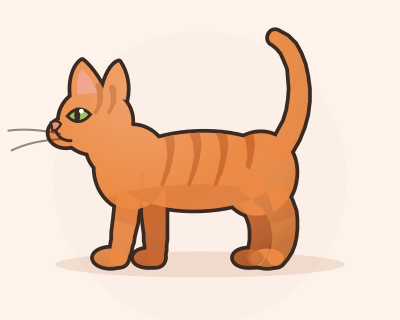 Held upA friendly greeting.
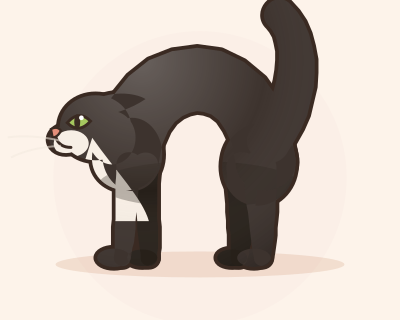 Puffed up“Stay away.” It feels threatened.
 TuckedAnxiety or fear.
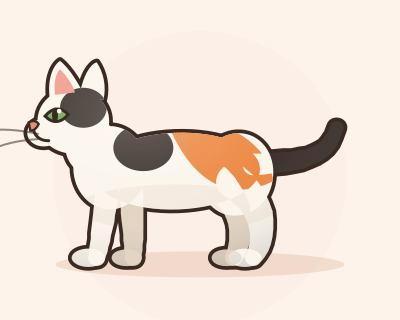 Twitching tipInterest or mild irritation.
Ears and whiskers
Relaxed ears face forward in their normal position. Ears that stand up and turn outwards, together with narrow pupils, usually mean frustration. Ears pressed flat against the head, with wide pupils, usually mean fear.
Whiskers help too. Relaxed whiskers sit loosely to the side. Whiskers pulled back flat against the cheeks suggest a worried cat. Whiskers fanned forward show a cat focused on something interesting, such as a toy or a fly.
Eyes and the slow blink
A long, hard stare is a challenge between cats. That is why a frightened cat often looks away or blinks quickly when someone stares at it.
Soft, half-closed eyes and slow blinks are the opposite. They signal a relaxed, content cat. A study published in Scientific Reports in 2020 found that cats were more likely to narrow their eyes back when their owner gave them a slow blink. Cats were also more likely to approach a stranger who slow-blinked at them. The researchers suggest the slow blink may work as a friendly signal between cats and people.
Try it yourself. Look at your cat with soft eyes, close them slowly, and open them again. Many cats blink back.
Body posture
- Lying stretched out or loosely curled. A comfortable, safe cat.
- Rolling over to show the belly. Usually a relaxed or playful greeting. It is not always an invitation to touch. Many cats will grab a hand that reaches for their tummy.
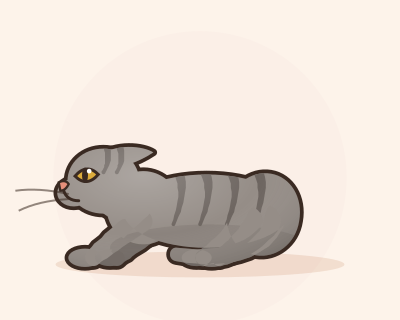
- Body low to the ground, paws tucked under, ready to run. Fear.
- Body tense and leaning forward. Confidence or readiness to act. Read the face and tail before you approach.
The sounds cats make
Adult cats rarely meow at each other. Most meows are aimed at people, and every cat develops its own set of them over time. You probably know the difference between “food, please” and “open the door” already.
A trill or chirrup is a friendly greeting. Purring is usually a sign of comfort, but some cats also purr when they are unwell or in pain, so look at the rest of the body. Hissing, growling, spitting and yowling all say “keep away”. They are warnings, not bad behaviour.
Scent, rubbing and scratching
When your cat rubs its cheeks against your legs, it is leaving its scent on you. Cats exchange scent this way with members of their group, so it is a compliment. Head-rubbing on furniture is linked to comfort and feeling at home.
Scratching keeps claws in good shape, but it also leaves a scent mark and a visible sign of the cat’s presence. Cats tend to scratch along routes they use often, like near doorways and sleeping spots. Put a tall, sturdy scratching post exactly there.
Everyday cat behaviour that puzzles people
- Kneading. Pushing rhythmically with the front paws, often while purring, is a comfort behaviour left over from kittenhood.
- Dawn wake-up calls. Cats are naturally most active around dawn and dusk.
- Sudden racing around. Usually spare energy, especially in indoor cats. More play during the day often helps.
- “Presents”. Bringing in prey is normal hunting behaviour, not a lesson for you.
- Chattering at birds. That quick clicking sound is hunting excitement mixed with frustration.
Are your cats friends?
If you have more than one cat, their body language towards each other tells you how they really get on. Cats that are true companions often:
- greet each other with tails up;
- groom each other, especially around the head and neck;
- sleep curled up touching;
- rub against each other when they pass.
Cats that merely put up with each other look different. They avoid eye contact, take turns using rooms, or wait until the other cat has left the food bowl. One may sit across a doorway or stare until the other backs off. There may be no fights at all, but both cats live with low-level stress.
Signs of a stressed cat
Stress in cats often looks quiet. Watch for:
- hiding much more than usual;
- grooming far more, sometimes until bald patches appear, or no longer grooming at all;
- urinating or soiling outside the litter tray;
- eating less, or scratching furniture more;
- being jumpy, irritable or less tolerant of being touched.
Common triggers include a new cat in the house or the neighbourhood, building work, visitors, a house move or a change of routine. Tension between cats in the same home is a frequent cause, often missed because it can be as subtle as one cat blocking a doorway. Our guide on how to introduce cats explains how to keep the peace.
How to answer your cat
Reading cat body language is only half the conversation. The other half is responding in a way that builds trust:
- Let the cat come to you. Offer a hand at nose height and let it sniff.
- Stroke the cheeks, chin and the base of the ears, where most cats like it. Many dislike long strokes along the belly or tail.
- Stop when you see a twitching tail, flattened ears or a skin ripple along the back.
- Never punish hissing or hiding. It teaches the cat that you are one more thing to fear.
- Play every day with a wand toy, ending with a “catch”.
When behaviour is a health warning
A sudden change in behaviour can be the first sign of illness or pain. A friendly cat that starts to hide or hiss, a cat that stops jumping, or one that suddenly misses the litter tray may be unwell. See our guide to the signs your cat is sick, and talk to a vet if the change lasts more than a day or two.
Frequently asked questions
Why does my cat show me its belly and then scratch me?
Showing the belly is a sign of trust, not a request for a tummy rub. The belly is vulnerable, so many cats defend it by instinct.
Does purring always mean my cat is happy?
Usually, but not always. Some cats purr when they are stressed, unwell or in pain. Look at the rest of the body and the situation.
What does it mean when a cat slow-blinks at me?
It is a relaxed, friendly signal. Slow-blinking back may help you build a bond.
Sources & editorial note
- International Cat Care — Cat communication
- International Cat Care — Anxious cats
- AVSAB (Zazie Todd) — Friendly felines: how to tell if your cats get along
- Humphrey and others, Scientific Reports (2020) — The role of cat eye narrowing movements in cat–human communication
Prepared by Miauly from the sources listed above, checked on 19 October 2026.