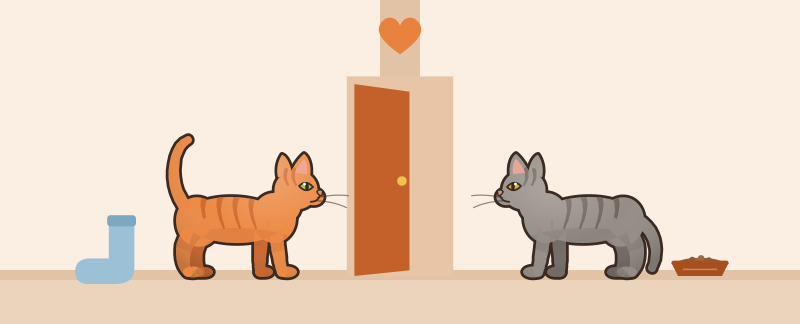
You have found the perfect second cat, and you can already picture the two of them curled up together. Your current cat may see things differently. To a cat, home is territory. A stranger walking in, however sweet, is a threat until proven otherwise.
The good news is that most cats can learn to share a home, and many become real friends. The secret is time. This guide explains how to introduce cats step by step, how to tell whether it is working, and what to do when it isn’t. The whole process can take a few days or a few months. Let the cats set the speed.
Is a second cat a good idea?
Cats are not pack animals. Some love company, others are happiest as the only cat. Before you commit, think about your current cat. A cat that has lived with other cats before, and a calm, sociable newcomer, give you the best start. An elderly or anxious resident cat may find a lively kitten exhausting.
Littermates or cats that already know each other often settle together more easily. If you are adopting, ask the rescue about the cat’s history with other cats.
Before the new cat arrives
Health first. Take the newcomer to a vet before it meets your other cat. Check vaccinations, parasites and, where your vet advises, tests for infectious diseases.
Set up a transition room. Choose a quiet room your current cat doesn’t use much and that you can close. Fill it with everything the new cat needs: food, water, a litter tray, a bed, a scratching post, toys and places to hide and climb. Use new items or the newcomer’s own, not things that smell of your resident cat.
Double up on resources. In the rest of the home, plan one of each key thing per cat, plus one extra: litter trays, food bowls, water bowls, beds and scratching posts. Spread them out so no cat has to pass another to reach them.
Optional extras. Some vets suggest a pheromone diffuser in the main living area and the transition room, plugged in a day or two before the new cat comes home.
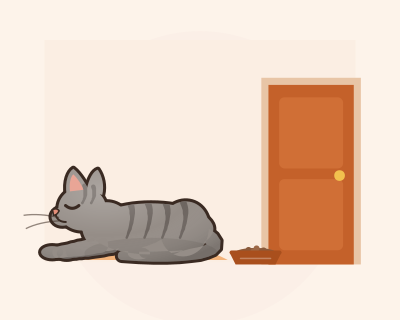 1. A room of its ownLet it explore in its own time.
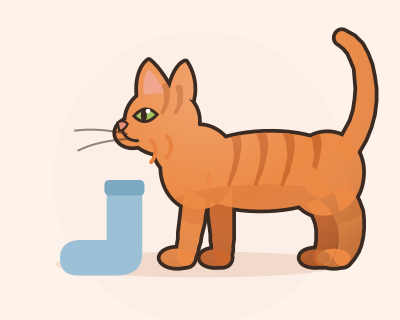 2. Swap scentsA cloth or sock from the other cat.
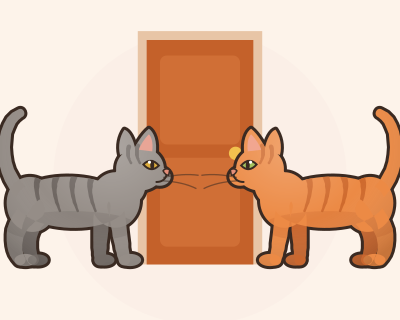 3. Play at the doorPlay and treats on both sides.
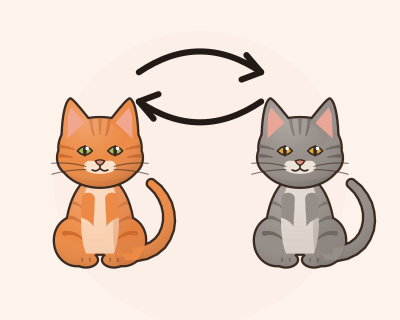 4. Swap territoriesEach explores the other’s space.
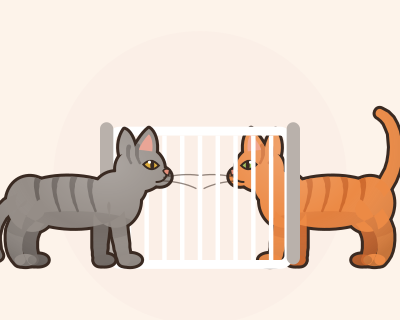 5. Through a barrierThey see each other, safely.
 6. Short visitsTogether for a little longer each time.
Step 1: a room of its own
Bring the new cat home in a carrier covered with a towel, and open it in the transition room. Then leave it alone. Let it come out, hide and explore in its own time. Your resident cat carries on as normal in the rest of the house.
Stay at this stage until the new cat explores the room confidently, eats well and uses the tray. That can take a few days or a week or two.
Step 2: swap scents
Cats meet by smell long before they meet face to face. Swap a piece of bedding or a toy between the cats every day. Then rub a soft cloth gently on one cat’s cheeks and chin, and leave it where the other cat can sniff it in its own time.
Watch the reaction. Sniffing and walking away is fine. Hissing, growling or avoiding the item means you should go more slowly and keep swapping until it is ignored.
Step 3: play on both sides of the door
Once smells cause no tension, play with each cat on opposite sides of the closed door. A long wand toy or two toys tied together that both cats can chase works well. Keep sessions short, five to twenty minutes, and stop before anyone gets frustrated.
Step 4: swap territories
Shut your resident cat in a favourite room for a while, and let the newcomer explore the rest of the home. Start with short visits and make them longer over several days. This lets each cat spread its scent and learn the other’s, without meeting.
Step 5: see each other through a barrier
Now let them see each other, but not touch. A glass door, a tall baby gate, a mesh screen or a door held ajar with a stopper all work. Keep it short and end on a calm moment. Reward relaxed behaviour afterwards with praise, play or a favourite treat.
If one cat hisses, growls, flicks its tail or stares, quietly break the line of sight with a cushion or board, and try again another day.
Step 6: short visits together
When both cats can watch each other calmly, open the barrier while they are busy, for example while you play with both. Stay in the room, but don’t pick them up or push them together. Let each cat walk away whenever it wants. Then gradually leave them together for longer, starting with a few minutes, as long as each cat can still retreat to its own space.
Is it going well?
Good signs include:
- relaxed bodies and tails held up;
- sniffing noses, then going back to normal activities;
- eating, sleeping and playing in the same room;
- the new cat no longer hiding all the time.
Warning signs include:
- staring, stalking or one cat blocking a doorway or the litter tray;
- hissing, growling or swatting that doesn’t settle;
- one cat hiding, eating less, or toileting outside the tray.
Hissing at the start is normal. It is a warning, not a declaration of war. What matters is whether things improve over the days.
If they fight
Never put your hands between fighting cats. Make a noise, drop a cushion between them or slide a board across, then separate them into different rooms. Let both calm down for a few hours, then go back a step or two in the plan and move more slowly.
Never punish either cat. It only adds fear, and the cat links the fear to the other cat.
Kittens, seniors and outdoor cats
- Kitten with an adult cat. Kittens have energy to burn. Give the kitten plenty of play with you, so it doesn’t spend it all pouncing on an older cat that wants peace.
- Elderly or unwell resident cat. Think carefully. Change is harder for an older cat. If you go ahead, keep its routine and favourite spots exactly as they were.
- A cat that used to live outdoors. It may need longer in the transition room to get used to indoor life and people. Our guide on whether a cat is stray, feral or lost helps you check it doesn’t already have a home.
How to introduce cats: mistakes that set things back
- Rushing. Putting the cats together on day one “to get it over with” is the most common reason introductions fail.
- Forcing contact. Carrying one cat over to the other only increases fear.
- One shared set of everything. A single litter tray or food bowl turns daily life into a competition.
- Forgetting your first cat. Keep its routines, its play time and its favourite places. It should not lose anything because a newcomer arrived.
When to get help
If fights continue, if one cat is constantly hiding, or if one stops eating or using the tray, talk to your vet. Stress can cause real illness, such as bladder problems. Your vet may refer you to a qualified cat behaviourist. Our guide to cat body language shows the quieter signs of tension to watch for.
Frequently asked questions
How long does it take to introduce cats?
Anything from a few days to a few months, and sometimes longer. Move to the next step only when both cats are relaxed with the current one.
Is it normal for my cat to hiss at the new cat?
Yes, at the beginning. Hissing is a warning. If it fades over the following days, things are on track.
Should I let them “fight it out”?
No. Fights create fear that can last for a long time. Separate them and go back a step.
Sources & editorial note
- American Association of Feline Practitioners — Step-by-step guide: how to introduce a new cat to other cats in your home
- International Cat Care — Introducing cats
- International Cat Care — Conflict between cats
Prepared by Miauly from the sources listed above, checked on 19 October 2026.