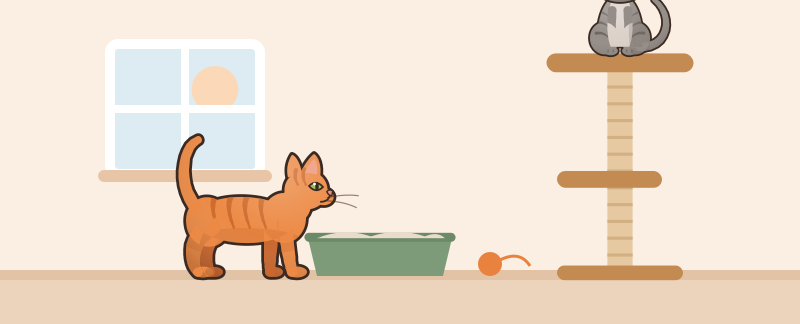
Having a cat isn’t a lot of work, but it is a little every day. Scooping the litter, a play session, a brush now and then. These small routines keep your cat healthy and happy.
This guide explains how to look after a cat at home, step by step. For food, we have a separate guide on cat nutrition.
The litter tray
To a cat, the litter tray matters a great deal. If it doesn’t like it, it will find somewhere else.
- How many. The usual advice is one per cat, plus one extra.
- Where. Somewhere quiet, away from food and water. Not next to a noisy washing machine.
- Size. Big enough for your cat to turn around comfortably.
- Litter. Most cats prefer fine, unscented litter.
- Cleaning. Scoop out waste every day. Replace all the litter and wash the tray regularly.
If your cat suddenly stops using the tray, it may be a health problem. Check with your vet.
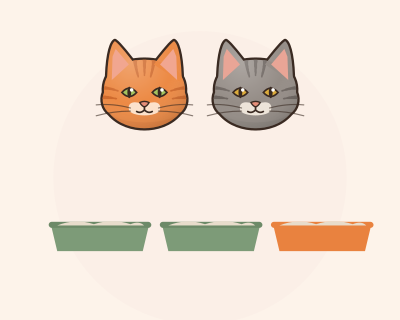 One per cat, plus oneTwo cats, three trays.
 Quiet, away from foodNot next to a noisy machine.
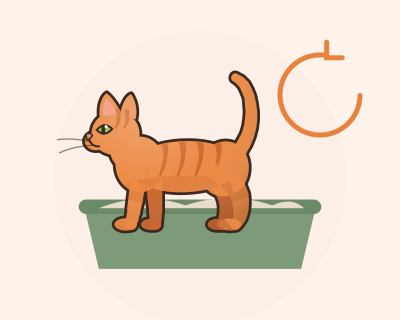 Big enoughRoom to turn around comfortably.
 Scoop every dayFine, unscented litter suits most cats.
Grooming
Cats keep themselves clean, but brushing helps, especially when they shed in spring and autumn.
- Short hair: once a week is usually enough.
- Long or semi-long hair: daily or nearly daily, to prevent mats.
Start with short sessions and a treat. If your cat has large mats, don’t cut them out with scissors: it’s very easy to cut the skin. Ask your vet or a cat groomer.
Cats rarely need a bath, except in specific cases.
Claws
With a good scratching post, many cats never need their claws trimmed. But in older or indoor cats, claws can grow too long.
Use cat nail clippers and trim only the clear tip. Stay away from the pink part, which has blood vessels. If you’re not confident, your vet can do it or show you how.
Scratching posts and high places
Scratching is a need, not naughtiness. A good scratching post:
- is tall enough for your cat to stretch out fully;
- is stable and doesn’t wobble when climbed;
- stands somewhere visible, near where your cat sleeps or by the door.
Cats also love to watch from above. A shelf, a cat tree or the back of a sofa gives them a sense of safety.
Daily play
Play isn’t an extra. An indoor cat needs to hunt, even if it’s pretend. A few short sessions a day, with a wand toy or something that moves, help it burn off energy. If your cat has habits that worry you, read our guide to cat body language and behaviour.
A safe home
Many cat falls happen from windows and balconies. Cats are overconfident about their balance, and a bird or a sudden noise can make them leap.
- Fit strong netting or screens to open windows and balconies.
- Be careful with tilt-and-turn windows: cats can get trapped in the gap.
- Keep medicines, cleaning products and string out of reach.
- Before running the washing machine or tumble dryer, check your cat hasn’t climbed inside.
- Watch out for plants: lilies are very dangerous to cats, even the pollen.
Fresh air, safely
Indoor cats enjoy the outdoors too, in safe doses. A window perch with a view of birds can keep a cat entertained for hours. An enclosed balcony or a small outdoor run lets it sniff the air without risk. Some cats learn to walk on a harness: start indoors, in short, calm sessions with treats, and never force it. Indoor cats also enjoy cat grass to nibble.
Identification
A microchip gives a lost cat the best chance of coming home. Keep your contact details up to date on the chip database. If your cat goes outside, a quick-release safety collar with a tag can show neighbours it has a home.
Teeth and ears
Once a week, take a quiet moment to look in your cat’s mouth and ears. Gums should be pink, with no redness or bad smell. Ears should be clean inside. If your cat allows it, you can get it used to tooth brushing with a cat toothpaste. Never use human toothpaste.
How to look after a cat when you go away
Cats are independent, but not independent enough to be left alone for long. If you go away, find someone who can visit every day: to give food and water, scoop the litter and keep your cat company.
Leave written notes with your cat’s routine, the vet’s phone number and where the carrier is kept. Show the sitter around before you leave.
Check-ups
Once a year, take your cat to the vet even if it seems fine. The check-up can catch problems your cat is hiding.
Frequently asked questions
How often should I change cat litter?
Scoop out waste every day. The rest depends on the litter type: follow the pack’s advice and replace it all before it starts to smell.
Should I bath my cat?
Usually not. Cats clean themselves. Only bath your cat if a vet advises it or it has got something harmful on its coat.
Can I leave my cat alone for a weekend?
It’s better if someone visits every day. A cat on its own can run into trouble with water, food or health without anyone noticing.
Sources & editorial note
- International Cat Care — Everyday care for your cat
- International Cat Care — Choosing a litter tray for your cat
- International Cat Care — Grooming your cat
Prepared by Miauly from the sources listed above, checked on 19 October 2026.