
Cats don’t like change. Travelling with a cat, moving house or a week with a stranger at home can all unsettle it. But with a little preparation, everything gets much easier, for your cat and for you.
This guide explains how to prepare your cat for a journey, what to check before going abroad and how to move house without your cat having a hard time.
First, ask whether it needs to come
Many cats are happier at home, with a trusted person visiting every day, than on the road. For a weekend or a short holiday, that may be the best option.
If your cat does need to come with you, or you’re moving, plan ahead.
The carrier: your best ally
Many cats only see the carrier on the way to the vet. No wonder they hate it. You can change that:
- Leave the carrier open at home, weeks before the trip.
- Put a blanket inside that smells of home.
- Now and then, leave a treat or a little food in it.
- Once your cat walks in calmly, close the door for a few seconds. Then a little longer.
Choose a sturdy carrier that opens at the top and the front. It makes getting your cat in and out much easier.
 Leave it openOut at home, weeks before.
 A blanket from homeSomething that smells familiar.
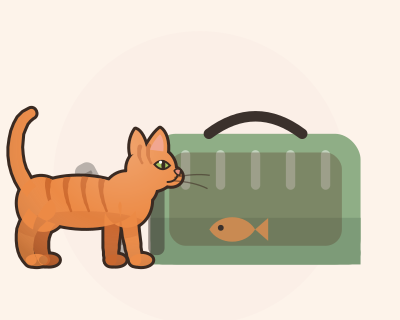 A treat now and thenFood inside, from time to time.
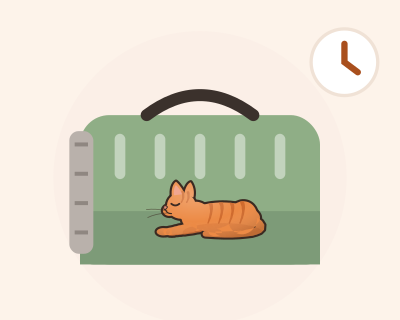 Close it brieflyA few seconds, then a little longer.
Travelling with a cat by car
- Put the carrier on the back seat, secured with a seatbelt, or in the footwell. Never in the boot.
- Partly cover it with a towel: many cats calm down in the dark.
- Don’t open the carrier inside the car.
- On long trips, stop now and then to offer water.
- Never leave your cat alone in a parked car, especially in warm weather.
It’s best if your cat doesn’t eat just before setting off, to avoid travel sickness. Ask your vet how long before the trip to take food away.
Trains and planes
Every company has its own rules: carrier size and weight, whether cats can travel in the cabin and the cost. Check them before you book. On a plane, a direct flight is kinder than one with connections.
Travelling abroad
Every country sets its own entry rules for pets, and they change. Many ask for a microchip, a valid rabies vaccination and an official health document or pet passport. Some require blood tests or waiting periods, which can take weeks or months.
Check the official requirements for your destination well in advance, and for the return trip too. Your vet can help with the paperwork. See also our guide to preventive health care.
Calming medicine: only from your vet
Never give your cat a sedative on your own. Some human medicines are poisonous to cats. If your cat gets very anxious, talk to your vet. There are options, but they need to be chosen for your cat.
If your cat stays with a sitter
If your cat stays at home with someone you trust, leave them a note with everything they need: meal times and amounts, where the litter tray is and how often to clean it, your cat’s hiding places and the vet’s number. Introduce them before you leave. If you choose a cattery, visit first and check that cats are kept away from dogs.
Moving house
Moving is one of the most stressful events for a cat. A few ideas:
- Before. Bring out the boxes a few weeks early, so your cat gets used to them.
- On moving day. Shut your cat in an empty room with water, litter and its carrier, and put a sign on the door. That way it can’t slip out while people come and go.
- In the new home. Set up one room with its things: bed, litter tray, scratching post and food. Don’t give it the whole house at once.
- The days after. Open up the rest of the home gradually. Keep the usual routine.
If your cat goes outdoors, keep it in for several weeks. It may try to return to the old house.
Don’t forget the paperwork
When you change address, update your details on the microchip database. In your new area, find out whether there are local rules about registering pets.
Signs of stress
After a trip or a move, it’s normal for a cat to hide for a few days or eat less. Be concerned if:
- it hasn’t eaten for more than a day;
- it is peeing outside the tray, or not peeing at all;
- it hides for many days and won’t come out even to eat.
If so, call your vet. To recognise other signs, read our guide to cat body language.
Frequently asked questions
Can I travel abroad with my cat without paperwork?
Almost never. Most countries require at least a microchip and a rabies vaccination, and often an official document. Check the rules for your destination early.
How long does a cat take to settle into a new home?
It depends on the cat. Some settle in days; others need a few weeks. Patience is key.
Is it better to travel with my cat or leave it at home?
For short trips, many cats are happier at home, with someone visiting every day.
Sources & editorial note
- International Cat Care — Travelling with your cat
- International Cat Care — Moving house with your cat
- International Cat Care — Identifying your cat
Prepared by Miauly from the sources listed above, checked on 19 October 2026.